New Build Electrical Installation - First and Second Fix
On a new build the electrics are done in two separate stages, with plastering and decorating in between. Get the order wrong and you break a finished wall - which is why planning matters more here than speed.
Leave a requestFirst fix - the rough installation
First fix happens before plastering, while the walls are still bare. This is where you decide the position of every socket and every light for the next thirty years - changing it later means breaking masonry.
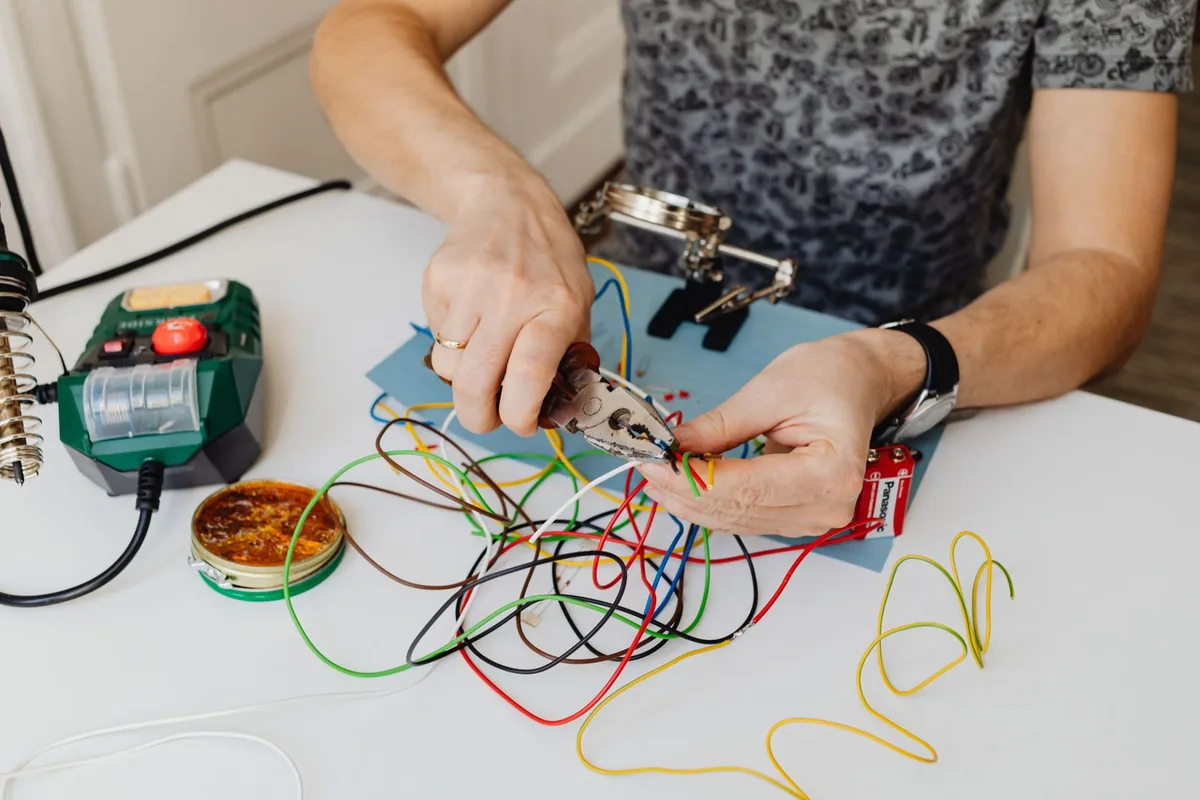
- Marking out positions with the client and against the drawings
- Chasing the walls vertically and horizontally to standard, so any future trade knows where the cables run
- Fitting junction boxes and back boxes
- Running cable for power circuits, lighting, air conditioning and heavy appliances
- Separate circuits for the cooker, water heater, washing machine and air conditioning - each sized correctly
- Preparing the position for the consumer unit
- Earthing and bonding of metal services
Cable size is not the place to save money. Lighting is normally 1.5 mm², sockets 2.5 mm², and heavy appliances are calculated from load and cable run. Undersized cable means heat, voltage drop and a shorter life.
Second fix - the finishing installation
Second fix comes after plastering and decorating, when the space is ready to be finished:
- Fitting sockets, switches and faceplates
- Populating and connecting the consumer unit with breakers and RCD protection
- Fitting light fittings and chandeliers
- Connecting the water heater, cooker, air conditioning and ventilation
- Testing, inspection and energising
What gets checked before energising
An installation that "works" is not the same as an installation that is sound. Before handover we measure insulation resistance, verify the earthing and test the RCD with an instrument - not by pressing the test button.
You receive documentation for that work. It is what you need both at handover and later if you sell. An installation with no paperwork becomes a problem at exactly the moment you no longer remember who built it.
The most common new build mistakes
- Too few sockets - the cheapest change is the one made while the wall is still open
- A forgotten air conditioning supply, followed by a cable running across the living room wall
- All the lighting on one circuit - one breaker goes and the whole house is dark
- A consumer unit sized exactly, with no spare ways for anything added later
- No separate kitchen circuit, where the cooker, microwave and dishwasher all run at once
- Work completed with no documentation, remembered only at the point of sale
We work with builders too
If you are building through a contractor, we fit into their programme and coordinate with the plumbing and masonry work so nobody waits on anybody. If you are building yourself, we tell you in advance when we need to be on site, so the build does not stall because of us.
Frequently Asked Questions
How long does the electrical work on a house take?
It depends on the floor area and the number of circuits. First fix on an average family house is a few days, second fix is shorter, and there is a gap in between while plastering and decorating happen. We give you a firm timeline once we have seen the building or the drawings.
Can you do only one of the two stages?
Yes. We will come in for second fix only if someone else did first fix, but we check what was installed first. If we find something that is not to standard, we tell you before continuing - we do not connect on top of work we cannot stand behind.
When should we call you?
Ideally while the walls are still going up, before plastering. At that point positions can be agreed freely. If you call once the walls are finished, every change means chasing them again.
Do you handle the connection to the grid?
We prepare the meter position and the installation for connection. The connection itself and the paperwork are handled by the distribution company. We explain what you need to submit and in what order.
How many sockets are enough?
There is no universal number, but the rule is: count how many you think you need, then add more. Adding them while the wall is open costs very little. Adding them afterwards means chasing, plastering and repainting.
Where we do this work
Leave a request, we will contact you when we return
We are not taking calls until October 15. Fill in the form and we will get back to you as soon as we return.