Connecting Appliances and Equipment
The new appliance has arrived and the shop leaves it by the door. Connecting a cooker, water heater or washing machine is not a matter of plugging it in - those appliances need their own circuit, their own protection and proper earthing.
Leave a requestWhat we connect
- Cookers and induction hobs - usually need their own circuit, and induction often a three-phase supply
- Water heaters - connection, element and thermostat replacement, dedicated supply and protection
- Washing machines and dishwashers - an earthed socket, never via an extension lead
- Extractor hoods - a supply above the hob, with the cable concealed rather than run across the wall
- Air conditioning - a dedicated circuit and breaker sized to the unit
- Fridges and freezers - checking the socket and the earthing
- Wall-mounted televisions - bracket, concealed cable and a socket behind the screen
Why an extension lead will not do
Cookers, water heaters and washing machines are high-load appliances. Extension leads and multi-way adaptors are made for a lamp and a charger, not for something that draws heavily for hours. The result is a hot connection, melted plastic and usually a burnt-out socket before anyone notices anything.
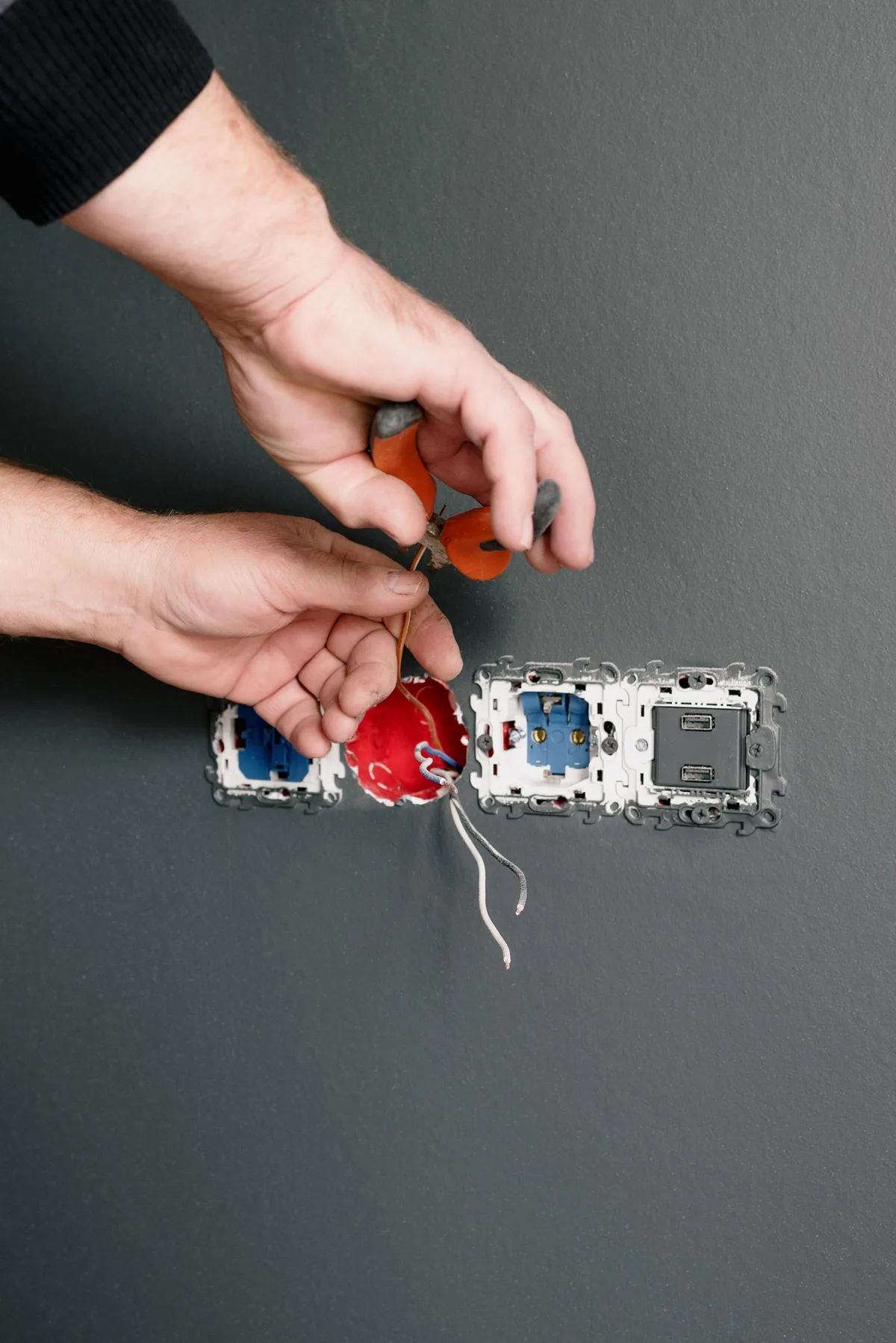
The second issue is earthing. The metal body of a washing machine or cooker must have a path to earth. Without it, the first insulation fault puts voltage on the casing - which people touch with wet hands.
When a dedicated circuit is needed
A dedicated circuit means a cable running straight from the consumer unit to that appliance, with its own breaker. It is needed when the appliance has a high continuous load, or when the existing circuit already carries more than it was designed for:
- Cookers and induction hobs - almost always
- Water heaters - yes, with their own protection
- Air conditioning above a certain rating - yes
- A washing machine and dishwasher in the same kitchen - advisable, especially if they run at the same time
- Electric vehicle chargers - mandatory, with dedicated protection
Bathroom electrics
Bathrooms have stricter rules than other rooms, because water and electricity are a metre apart. Sockets and switches cannot go just anywhere, and residual current protection here is a requirement rather than a recommendation.
- RCD protection for bathroom circuits
- Sockets at the permitted distance from bath and shower
- Correct connection of water heaters and towel rails
- Lighting with the right ingress protection
- Supplementary bonding for metal services
How we work
Before connecting anything we check what the existing circuit already carries and the condition of the socket behind the faceplate. If we find darkened insulation or a hot connection, we tell you before the appliance goes on - we do not add a new load to a connection that is already heating up.
If a new circuit is needed, we explain what that involves and how long it takes, and you decide. Every job comes with an invoice and a written guarantee.
Frequently Asked Questions
Will you come out for just one appliance?
Yes. We will come for a single washing machine. If you have several appliances or other small jobs, we do them in the same visit.
The shop just delivered my cooker - can you do it today?
Usually yes, but it depends on whether a suitable supply exists. If the cooker needs its own circuit and there is none, that is additional work and we tell you up front what it involves.
Can a water heater go on an existing socket?
It is not advisable. A water heater draws heavily for long periods, so it needs a dedicated supply with its own protection. Running one off an ordinary socket is a common cause of overheated connections.
Do you replace water heater elements and thermostats?
Yes. If the heater is not heating or the breaker trips when it switches on, it is usually the element or the thermostat. We test first so we know which, then replace it.
Do you mount televisions on the wall?
Yes, with a bracket and concealed cabling to a socket behind the screen, so there are no cables down the wall. Tell us the model and the wall type when you call.
Where we do this work
Leave a request, we will contact you when we return
We are not taking calls until October 15. Fill in the form and we will get back to you as soon as we return.